


Table of Contents
You can rent an apartment in Germany without speaking German. You do not need a language certificate to sign a lease. The challenge is practical: most of the market runs in German, and the steps around the lease (documents, registration, utilities, maintenance) can fail if you cannot communicate or verify what you are signing.
This guide explains what is realistic, what is risky and how to reduce the language barrier when you rent.
Reality check: how much English exists in the German rental market?
English shows up often in big cities and in rentals aimed at international tenants, but it is not the default.
What usually happens in practice:
- Listings: Some listings are bilingual, but many are German-only. Key details can be missing in English summaries (utilities, deposit, contract type, termination rules).
- Landlord communication: Private landlords often prefer German because it reduces misunderstandings and effort. Corporate landlords and managed buildings are more likely to speak English.
- Contracts: German is the legally relevant language in many contracts. If you get a bilingual contract, check which language version is legally binding.
- Authorities: Many official processes are German-first. For example, address registration (Anmeldung) is governed by German law and handled by local offices.
If you are flexible on location, rent level, and apartment type (especially furnished), renting without German is much easier.
Factors that influence how easy it is
City and neighborhood
- Large international hubs (Berlin, Munich, Hamburg, Frankfurt, Cologne) tend to have more English-speaking landlords, property managers, and expat-oriented inventory.
- Smaller cities can still work, but you should expect fewer English interactions and more reliance on translation help.
Landlord type and tenant demand
- Private landlords: more variation. Some are happy with English; others avoid it.
- Professional landlords/agencies / serviced providers: more standardized processes, higher chance of English support, more predictable paperwork.
High demand reduces flexibility. When many applicants apply, landlords choose the lowest-effort option, and language can become a filter even if nobody says it out loud.
Building type and target group
- Student housing / WG rooms: often easier for internationals, but competition can be intense and documentation varies.
- Mainstream, unfurnished apartments: typically require the most German paperwork and ongoing communication.
Furnished vs unfurnished
This is the biggest lever.
- Unfurnished (long-term) often means:
- more documents (credit checks, rental history),
- setting up utilities yourself,
- more German-language communication during the tenancy.
- more documents (credit checks, rental history),
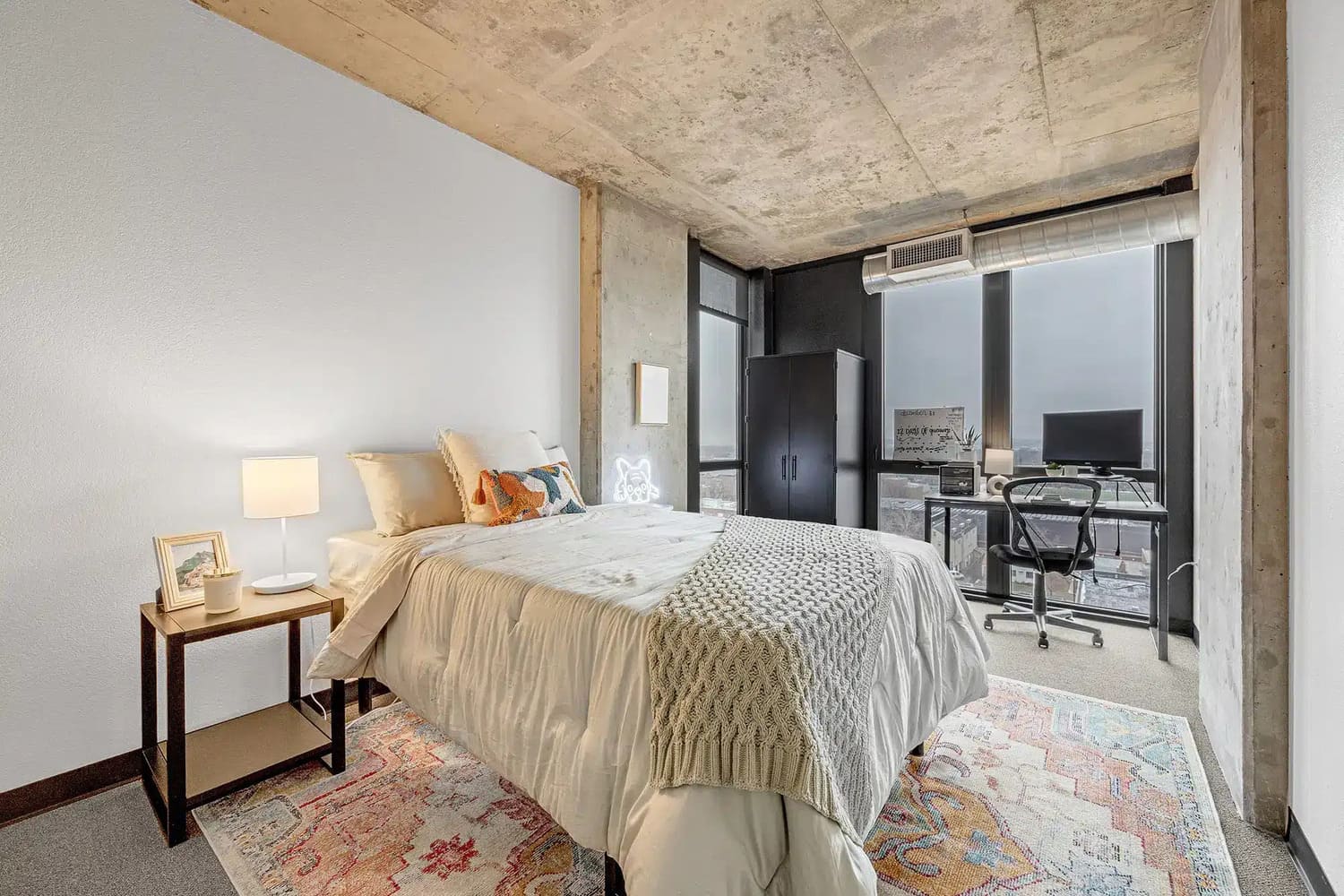
- Furnished (mid-term/temporary) often means:
- faster move-in,
- furniture and sometimes utilities included,
- a clearer path for newcomers who do not have a German rental history.
- faster move-in,
Wunderflats focuses on furnished rentals with a minimum rental period of one month.
Practical strategies that work
1) Use international-friendly platforms and structures
If your priority is “rent an apartment in Germany without German,” choose channels that are built for non-German speakers.
On Wunderflats, key points that reduce friction for non-German speakers:
- Bilingual rental contract: The Wunderflats verified rental contract is bilingual; the German version is legally valid and the English translation is for orientation.
- SCHUFA is not required through Wunderflats: According to Wunderflats, tenants do not need SCHUFA to conclude a rental agreement; other documents (like payslips or bank statements) are used to check financial liquidity.
- Confirmation of residence support: A landlord is usually obliged to issue a Wohnungsgeberbestätigung for Anmeldung; Wunderflats also provides guidance and templates.
These points matter because SCHUFA and German-only contracts are common blockers for newcomers.
2) Build a “low-effort” tenant profile
Language barriers become less important when the landlord trusts you will pay, move in cleanly, and communicate reliably.
A strong profile includes:
- Clear move-in and move-out dates
- Reason for stay (job relocation, project, studies)
- Employment status and income proof
- Clean, consistent documentation (single PDF bundle if possible)
- Simple communication style (short messages, bullet points)
If you rent through Wunderflats, upload required documents early in your account (“My Documents”) so the booking process does not stall.
3) Translate the documents that slow landlords down
You usually do not need to translate everything. Translate what a landlord uses to decide:
- Employment contract summary page (salary, duration, employer)
- Proof of income (payslips) or bank statement highlight (balance + incoming salary)
- Reference letters (previous landlord, employer) if you have them
- ID page (if non-Latin script causes confusion)
Avoid “creative translations.” Keep formatting close to the original. If the document is for authorities or legal use, use a sworn translator (see resources below).
4) Offer alternatives if you lack German rental history
Many expats hit the same problem: no SCHUFA score and no German rental track record.
Options that help:
- Guarantor (Bürgschaft): Common for students and interns. Wunderflats also mentions using a guarantee + guarantor documents for certain tenant types.
- Higher transparency: more proof of funds, stable employment, clear duration
- Shorter initial commitment: mid-term furnished first, then long-term after you have local history and time to apartment-hunt in Germany.
5) Use communication templates
Short, consistent messages reduce misunderstandings.
Viewing / booking message (English):
- Dates: [move-in] to [move-out]
- People: [number of occupants]
- Work: [role, employer, contract type]
- Documents: “I can provide ID + proof of income immediately.”
- Question: “Is Anmeldung possible at this address?”
Key German line that helps (copy/paste):
Ist eine Anmeldung (Wohnsitzanmeldung) an dieser Adresse möglich?
6) Avoid “English-only” negotiation
A common trap: trying to negotiate complex legal clauses in English with a landlord who is not fluent. You can still negotiate, but do it with:
- simple written proposals,
- a translator or bilingual friend for the final wording,
- confirmation in writing.

Key legal and bureaucracy issues and how to manage them
Anmeldung (address registration)
If you move into a German address, you generally must register within two weeks of moving in.
For Anmeldung, you normally need a Wohnungsgeberbestätigung (landlord confirmation of residence). The obligation and framework are anchored in the Federal Registration Act, and the confirmation is tied to the landlord/accommodation provider.
What to do if you do not speak German:
- Book the appointment early (availability can be limited).
- Bring a bilingual friend or translator if needed.
- Prepare a printed folder: passport, lease, Wohnungsgeberbestätigung, completed registration form (if your city uses one).
- Confirm upfront that your rental allows registration (some accommodation types or arrangements may not support it).
Wunderflats’ help center explicitly addresses the Wohnungsgeberbestätigung and provides a template and required content.
Rental contract language and what is binding
If you sign a contract you do not understand, you still sign a binding contract. A bilingual contract reduces risk, but you still need to know which version is legally decisive.
Wunderflats states its verified rental contract is bilingual and that the German version is legally valid while the English translation is for convenience/orientation.
If you are not using a bilingual contract:
- Get a professional translation or at least a clause-by-clause summary before signing.
- Pay attention to: rent composition (cold vs warm), deposit, termination, utilities, furnishing inventory, house rules, subletting, pets, and handover conditions.
Handbook Germany’s rental contract overview is a good baseline checklist for what to review before signing.
Deposit (Kaution)
German law limits a rental deposit for housing to three months’ rent (commonly understood as cold rent / Kaltmiete) and allows payment in three monthly installments when the deposit is a money sum.
Language-related risk: misunderstandings about what counts as rent, what counts as utilities, and whether extra “furniture fees” are being added.
Termination and notice periods
For open-ended residential leases, German law sets deadlines for ordinary termination. The statutory timing is regulated in § 573c BGB.
If you rent on a fixed term, the rules change. Fixed-term tenancy (Zeitmietvertrag) is regulated under § 575 BGB, and the reason for the fixed term must be stated in writing at contract conclusion; otherwise, it can be treated as open-ended.
Language-related risk: tenants assume they can cancel “like a hotel.” Ofte,n they cannot unless the contract allows it.
Utilities and ongoing admin
Who sets up electricity, internet, and other utilities depends on the rental type:
- Many furnished rentals bundle services into the price (check the listing and contract).
- Many unfurnished rentals require you to contract electricity/internet yourself, often with German-language portals and customer service.
Mitigation:
- Ask for written confirmation of what is included.
If you must set up utilities, ask the landlord for the existing meter numbers and provider info, then use a translator or bilingual helper to avoid contract mistakes.
Maintenance and repairs
Maintenance requests are easier to handle when you can write clearly and keep proof.
Best practice (language-independent):
- Report issues in writing.
- Include photos and dates.
- Ask for confirmation of receipt.
- Keep a timeline.
If you do not speak German, write short sentences and use translated key terms (Heizung heating, Wasser water, Schimmel mold).
Language resources and support
Resource list (translation + tenancy support)
Sworn translators and interpreters:
- BDÜ translator/interpreter database (search by language and city).
- Official database of sworn translators/interpreters by state justice administrations.
Tenant guidance in English:
- Handbook Germany: address registration (Anmeldung) and rental contract basics.
Wunderflats help topics that matter for non-German speakers:
- Bilingual rental agreement.
- Documents required / no SCHUFA requirement.
- Wohnungsgeberbestätigung (confirmation of residence).
Other practical support options:
- relocation agencies (especially for corporate transfers),
- university international offices (for students),
expat communities (to find bilingual help for viewings and admin).

Checklist: Renting in Germany without German
- Decide your rental type
- Need speed and low paperwork: furnished mid-term.
- Need lowest monthly cost long-term: unfurnished, but expect more German admin.
- Pick locations with realistic supply
- Choose 2–4 neighborhoods, not one.
Add a second city if your job allows it.
- Prepare a document pack
- ID
Proof of income (or bank statement)
Short tenant bio (1 page)
Optional: guarantor package (if student/intern)
- Use international-friendly channels
Filter for listings that support your situation (duration, Anmeldung, furnished, utilities).
- Send short, structured messages
Dates, number of occupants, job, documents ready, Anmeldung question.
- Verify the contract language
Identify which version is binding.
Translate any unclear clauses before signing.
- Confirm move-in logistics in writing
Key handover time
Inventory list (furnished)
Deposit payment method
What utilities are included
- Get your Wohnungsgeberbestätigung
Ask early, schedule Anmeldung.
- Register (Anmeldung)
Register within two weeks of moving in.
- Set up ongoing communication
One written channel with the landlord/manager
Templates for repairs and questions
Pros and cons of renting without German
Pros
- You can start your life in Germany before you speak the language.
- With the right rental type (often furnished), you can reduce setup tasks.
- Bilingual contracts and structured verification lower the misunderstanding risk.
Cons
- Higher chance of signing terms you did not understand.
- Harder to compete for unfurnished long-term apartments.
- More dependence on third parties for administration.
- Harder to resolve disputes if communication breaks down.
Pitfalls to avoid
- Signing without understanding termination rules (especially fixed-term clauses).
- Assuming Anmeldung is optional or ignoring the two-week deadline.
- Rent confusion: not separating cold rent, utilities, and extra fees.
- No inventory list for furnished apartments: increases deposit dispute risk.
- Paying before you have a clear, written agreement and verified counterparty.
- Relying on phone calls only: always confirm important points in writing.
So, what to do if you do not speak German?
Renting in Germany without German is possible, but the default market assumes German paperwork and German communication. The fastest way to reduce risk is to choose a rental path designed for internationals, prepare a complete tenant profile, and treat translation as part of the process, not a last-minute fix.
If you want the simplest setup, prioritize:
- furnished rentals with clear rules and included services,
- written communication,
- a contract format that gives you an English orientation while keeping the legally binding terms clear, and
- a plan for Anmeldung and the Wohnungsgeberbestätigung from day one.