



Table of Contents
If you want to move from the UK to Germany in 2026, the process is no longer based on free movement. Living in Germany after Brexit means you must follow German rules for third‑country nationals: pick a lawful purpose of stay, apply for the right residence title, and complete practical steps like registration (Anmeldung) and health insurance.
It can still be a manageable move, and in one specific way, it can be easier than for many other non‑EU nationals: UK citizens are treated as “privileged nationals” for entry and can often enter Germany visa‑free and apply for the required residence title from inside Germany, if they apply in time.
This article answers the core question behind most searches like “UK expats Germany visa requirements”: what do you need to do, what slows people down, and how do you plan the move so you do not get stuck in paperwork.
1) Visa and residence permit requirements for UK citizens in 2026
Short stays vs moving
Germany applies the Schengen short‑stay rule: visits are possible up to 90 days within any 180‑day period. For a real relocation (staying longer than 90 days, taking employment, or freelancing), you need an appropriate residence title.
A key advantage for British citizens: apply in Germany after entry
Under Section 41 of the Ordinance Governing Residence (AufenthV), UK citizens can often enter without a prior national (D) visa and apply for the required residence title in Germany. The deadline is strict: the residence title must be applied for within 90 days after entry.
What this means in practice:
- You do not automatically get a right to stay long‑term; you get the option to complete the residence title process in Germany instead of at a consulate.
- You still need to meet the requirements for the residence title you apply for (work, self‑employment, family, etc.).
Planning point: If you enter visa‑free and want to work or start self‑employment, expect a gap. BAMF notes that if you enter visa‑free and need a residence title for a stay longer than 90 days, you must apply within 90 days and the intended purpose (for example, work) may only be pursued after the residence title has been issued.
GOV.UK guidance also emphasises that UK nationals need a work visa or residence permit to work in Germany, and that you cannot start working until you have the relevant permission.
Apply from the UK or apply after arrival?
Both routes exist.
Apply from the UK when:
- you need more certainty before you move,
- you need to start work quickly, or
- your employer prefers a “visa first” process.
Germany’s Consular Services Portal is the official online gateway for some visa services (including a Blue Card (EU) visa workflow).
Apply after arrival (Section 41) when:
- you want to move first, then apply locally,
- you can fund yourself through the processing period, and
- you can handle local appointment wait times.
If processing takes longer than expected: “Fiktionswirkung”
If you apply for a residence title while you are lawfully in Germany without a residence title, German law provides that your stay is treated as permitted until the foreigners authority decides.
Local authorities may issue a Fiktionsbescheinigung (fictional certificate) as proof of this pending status; Berlin’s service portal notes that for visa‑free lawful residence based on nationality, the certificate is issued under § 81(3), and it permits stay until a decision, but it does not permit re‑entry if you leave Germany.

2) Which residence permit do you need?
Your permit type depends on what you will do in Germany. For most British citizens relocating to Germany, the relevant routes are:
Work with a job offer (employee route)
If you already have a job offer, you will usually fit either:
- the EU Blue Card, or
- a skilled worker / qualified employment residence permit.
EU Blue Card (2025 salary thresholds)
For many professionals, the EU Blue Card is the most predictable pathway because the criteria are published and widely used.
“Make it in Germany” states these 2025 thresholds:
- Standard threshold: €48,300 gross annual salary (as of 2025)
- Shortage occupations threshold: €43,759.80 (as of 2025), subject to Federal Employment Agency approval
- A lower threshold can also apply for some “new entrants” (degree within three years) (as of 2025)
Germany has expanded shortage occupations and introduced facilitation for some IT specialists under recent Skilled Immigration Act reforms.
Skilled worker permits and qualification recognition
If your role is not a Blue Card fit, Germany still offers skilled worker residence permits. The friction point is often not the permit itself but recognition for regulated professions or proof that your qualification is accepted.
The “Anerkennung in Deutschland” portal explains qualification recognition and notes that the ZAB checks whether someone has an appropriate qualification.
Job search (Opportunity Card / Chancenkarte)
If you are moving without a job offer, the Opportunity Card (Chancenkarte) can be the most practical legal route.
Official sources highlight that the Opportunity Card:
- uses a points system (minimum six points),
- requires a recognised qualification and language skills (German A1 or English B2) plus financial self‑support,
- allows part‑time work up to 20 hours/week and trial jobs up to two weeks.
This route reduces “entry friction” (no job offer required) but increases “budget friction” (you must fund the search).
Self-employment/freelancing
If you plan to freelance or start a business, you will apply for a self‑employment residence permit (often assessed under Section 21 Residence Act).
BAMF describes self‑employment and freelancing as a residence option and points out that permit length depends on the purpose; permanent residence can be possible after several years.
“Make it in Germany” provides a dedicated overview for self‑employment visas.
Expect more discretion and more documents than an employee route (business plan, financing, client pipeline).
Family reunification
If you are moving to join a spouse/partner or family member in Germany, the process depends on the sponsor’s status (German citizen, EU citizen, or third‑country national).
For family members joining a skilled worker, “Make it in Germany” notes that no proof of German language skills is required for family reunification in that scenario.
BAMF also describes eased family access for skilled workers and highly qualified persons.
3) Required paperwork after arrival: the “Germany starter pack”
Even with a valid residence title, daily life stalls if you miss these basics.
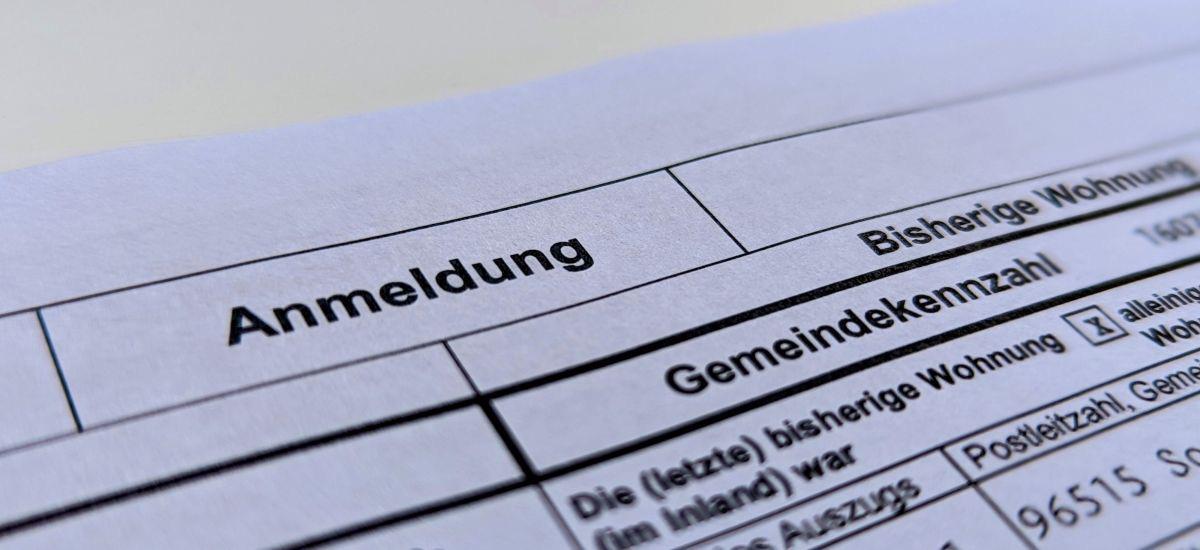
Anmeldung (address registration)
Anyone moving into a residence in Germany must register with the local registration authority within two weeks of moving in.
You typically need:
- passport
- rental contract / move‑in proof
- Wohnungsgeberbestätigung (landlord confirmation)
Wunderflats states that Anmeldung is possible in most apartments on the platform and advises checking the listing for confirmation‑of‑residence information.
Tax ID (Steuer‑ID)
Germany issues a tax identification number automatically. The Federal portal notes you receive one automatically and can request it again if lost.
Employers will ask for it, so you need a stable registered address and your name on the mailbox.
Health insurance
Health insurance is checked in visa/residence processes and is essential for normal life.
- Hamburg Welcome Center notes that statutory health insurance membership is generally sufficient proof, and private insurance must be proven if you are not in the statutory system.
- Berlin’s immigration office guidance explains that private cover is assessed for adequacy compared with statutory coverage.
Bank account
A German bank account is not always legally required for immigration, but it is operationally important (salary, rent, deposit). Many banks ask for proof of address, so Anmeldung often comes first.
4) Housing: how to find accommodation and avoid common traps
Start with renting, not buying
Most new arrivals rent first. Buying property is possible but slow (financing, notary process, due diligence) and rarely a good solution for “I need an address next month.”
A practical approach:
- Mid‑term furnished rental (to land, register, and submit your residence application)
- Longer‑term rental once you have local documents and a stable income
Prioritise “administration‑ready” housing
As a British citizen relocating after Brexit, your first apartment should make paperwork possible:
- Anmeldung allowed
- Landlord provides Wohnungsgeberbestätigung
- Contract length matches your onboarding / job search timeline
- Clear rent structure (cold rent vs utilities)
Wunderflats also has specific guidance on rental deposits, which is useful when you compare offers.
Deposits and tenancy rules
Germany’s deposit rules are stricter than many UK renters expect.
Under § 551 BGB:
- deposit is capped at three months of net cold rent (Kaltmiete)
- tenants can pay it in three equal monthly instalments
This matters when you are budgeting for a move, because “warm rent” (including utilities) can look manageable while the deposit calculation still runs on the cold rent. Also, do not to skip last month’s rent thinking the security deposit will cover it.
Housing competition (the part you can’t brute‑force)
In major cities, supply is tight and landlords can be selective. Competition affects both the price and the speed you can secure a place. If you have flexibility, choosing a city with a better housing ratio can make the entire relocation easier.
5) Social integration: language, culture, bureaucracy
Language: the minimum that reduces friction
You can work in English in many international teams, but German matters for:
- letters from authorities
- healthcare administration
- housing communication
- contracts and disputes
If you use the Opportunity Card, language is also part of eligibility (German A1 or English B2).
Bureaucracy: treat it like a workflow
Germany relies on formal registration and written confirmation. The fastest movers are not the ones who “figure it out on the fly”; they are the ones who book appointments early, keep document sets complete, and build buffers around processing.

6) Common challenges for UK expats in Germany (and what to do)
- Ausländerbehörde delays
Mitigation: apply early in your 90‑day window (Section 41), keep proof of submission, and understand interim status under § 81. - Starting work later than expected
Mitigation: if your start date is fixed, consider applying from the UK; if applying after arrival, assume a gap because BAMF states the purpose may only be pursued after the residence title is issued. - Qualification recognition
Mitigation: check whether your profession is regulated and use the recognition portal early. - Housing documentation expectations
Mitigation: use a mid‑term rental first, then transition when you have income proof and local paperwork.
7) Tips for a smoother move (with checklist + city map)
Pre‑move checklist: UK citizen edition
8–12 weeks before
- Choose your route: job offer / Blue Card / Opportunity Card / self‑employment / family.
- Start recognition research if your role is regulated.
- Build a budget that covers housing + insurance + a processing buffer.
4–8 weeks before
- Find housing where Anmeldung is possible.
- Collect documents and arrange translations if needed.
- If applying from the UK, set up the Consular Services Portal workflow.
Arrival
- Complete Anmeldung (or get the earliest possible appointment).
- Apply for your residence title within 90 days if using Section 41.
- Finalise health insurance coverage.
- UK driving licences are only valid for 6 months. Exchange UK licence for a German one within that timeframe.
Map: typical expat arrival cities and what each offers
- Berlin (northeast): tech/startups, English‑speaking roles; high housing competition.
- Hamburg (north): logistics, media, aviation; strong international networks.
- Frankfurt (central): finance/fintech and aviation; high rent in central areas.
- Cologne / Düsseldorf (west): media, services, corporate HQs; access to Rhine‑Ruhr jobs.
- Munich (south): high salaries in tech/engineering; expensive and competitive housing.
- Stuttgart (southwest): automotive/engineering ecosystem; tight housing.
Pick a city based on your sector and your budget, not just familiarity.
Is it easy?
It is not “easy” in the pre‑Brexit sense. You must choose the right residence title, apply on time, and complete the German admin steps.
But it is practical for many British citizens because:
- UK citizens can often enter visa‑free and apply in Germany under Section 41 (apply within 90 days),
- Germany provides clear work routes (including the Blue Card with published 2025 salary thresholds),
- and the steps become predictable once you sequence them: housing → Anmeldung → insurance → residence title → work.
If you plan the move as a sequence, not as a single leap, relocating from the UK to Germany in 2026 is manageable.


Legal review by Stephan Hartmann, Ass. jur., Data Privacy Officer at Lecturio — Tbilisi, Georgia
Disclaimer: The contents of this page have been prepared for your information and Stephan Hartmann, Ass. jur., Data Privacy Officer at Lecturio has been commissioned to check the legal correctness of this article. However, this article does not constitute legal advice. Always consult a legal professional for personalized guidance, especially if you're renting out property in Germany as a non-resident landlord or in complex circumstances.